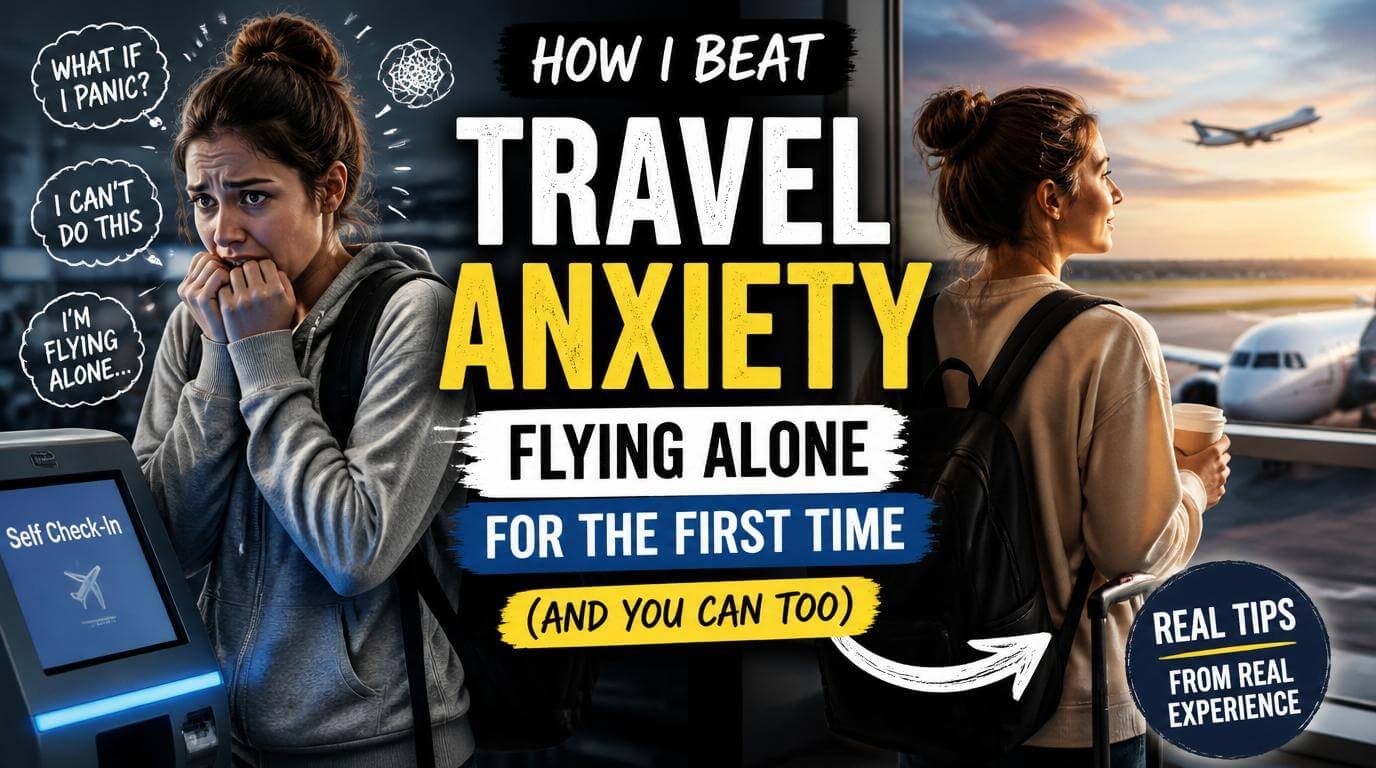
Figuring out how to handle travel anxiety when flying alone for the first time nearly broke me before I ever left the ground. My hands were shaking at the self-check-in kiosk. My stomach felt like it was staging a full revolt. I almost turned around three separate times before I even reached security. But I got on that plane, and I’ve flown solo dozens of times since. Everything I learned the hard way is right here.
Acknowledge That Your Anxiety Is Completely Normal
Before you try to fix anything, just accept that what you’re feeling makes sense. You’re doing something unfamiliar, in a high-stimulation environment, without your usual support system nearby. Your brain is doing exactly what brains do: flagging the unknown as potentially dangerous.
I spent weeks before my first solo flight pretending I was fine. Spoiler: I was not fine. The moment I stopped fighting the anxiety and just said “okay, I’m scared, and that’s allowed,” the pressure dropped a few notches. You don’t need to feel brave to do brave things. You just need to keep walking toward the gate.
Anxiety isn’t a sign that something is wrong with you. It’s a sign you’re about to do something that matters. Treat it like a passenger sitting next to you on the flight, present but not in control.
Plan Every Detail Before You Leave Home
Uncertainty is rocket fuel for anxiety. The less you have to figure out on the fly (pun intended), the calmer you’ll feel. So plan obsessively. I mean it. Plan like a person who gets nervous, because you are one, and that’s your superpower right now.
Before my first solo trip, I wrote down every single step of my airport journey. Which terminal. Which entrance. Where to drop bags. Where security was. Where my gate would roughly be. I pulled up the airport map on the official website and practically memorized the layout of the concourse.
Booking an aisle seat changed everything for me. I didn’t feel trapped. I could get up whenever I wanted without climbing over strangers. If window seats make you feel more secure because you can lean against the wall and zone out, go with that. The point is making a deliberate choice instead of leaving it to chance.
Also, download your boarding pass to your phone and screenshot it. Then print a paper copy. Yes, both. When your hands are shaking, fumbling with a phone that won’t load your QR code is the last thing you need.
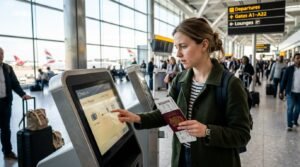
How to Handle Travel Anxiety When Flying Alone: Airport Arrival Strategy
Getting to the airport early might sound like common advice, but the reason it matters for anxious fliers is specific. Rushing cranks your cortisol up to a level where even small problems feel catastrophic. A long security line becomes a full-blown crisis. A gate change feels like the universe is personally attacking you.
I arrive at least two and a half hours before domestic flights. Three hours for international. That buffer gives me time to get through security slowly, find my gate, sit down, buy an overpriced bottle of water, and just breathe.
Here’s a trick that genuinely helped me: once you find your gate, sit down facing the windows so you can watch the planes. It sounds weird, but watching ground crews load luggage and planes taxi normally makes the whole process feel routine. Because it is routine. Thousands of flights take off every single day without incident. Watching that reality play out in front of you is oddly grounding.
If your airport has a quiet lounge or a chapel room, use it. Most major airports have some kind of low-stimulation space, and you don’t need a membership. Just ask at an information desk.
Build a Comfort Kit for the Flight
This is non-negotiable. Pack a carry-on bag specifically designed to keep you calm during the flight. Not just snacks and headphones, though yes, those too. I’m talking about a deliberate, anxiety-fighting toolkit.
Here’s what I pack every single time:
- Noise-canceling headphones (I use Sony WH-1000XM5s and they’re worth every penny)
- A downloaded playlist of familiar, calming music or a podcast I’ve already listened to before
- A small bag of gummy bears or trail mix, because chewing actually helps reduce stress hormones
- A lavender rollerball for my wrists (the Aura Cacia one from Target works great)
- A refillable water bottle, filled after security
- A comfort show downloaded on my iPad, something I’ve watched a hundred times
The key is familiarity. When everything around you is new and overwhelming, surrounding yourself with things you already know and love keeps your nervous system from going haywire. I watched three episodes of The Office on my first solo flight and barely noticed takeoff.
Use Breathing Techniques That Actually Work Mid-Flight
You’ve probably heard “just breathe” a thousand times and wanted to scream. Fair. But specific breathing patterns genuinely trick your nervous system into calming down, and they work fast.
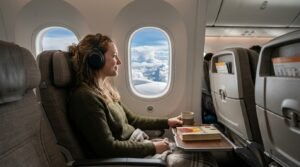
The one that saved me is called box breathing. Inhale for four counts. Hold for four counts. Exhale for four counts. Hold for four counts. Repeat. Navy SEALs use this technique in high-stress situations, and if it works for them, it works for someone sitting in seat 14C with a bag of gummy bears.
I do this during takeoff, during turbulence, and anytime my brain starts spiraling into “what if” territory. The first few rounds feel awkward. By the third or fourth cycle, my heart rate genuinely drops. You can do this silently, eyes open, and nobody around you will even notice.
Another option: the 4-7-8 method. Inhale for four counts, hold for seven, exhale slowly for eight. This one is better for when you’re trying to sleep on a longer flight. Dr. Andrew Weil popularized it, and honestly, it knocks me out faster than melatonin.
Tell Someone on the Plane
This felt mortifying the first time I did it, but telling a flight attendant that you’re a nervous flier flying solo changes the entire experience. They deal with anxious passengers constantly. It is literally part of their training.
On my second solo flight, I quietly told the attendant at the door that it was one of my first times flying alone and I was feeling anxious. She smiled, told me her name was Dana, checked on me twice during the flight, and explained every sound I heard during boarding that made me tense up. The hydraulic whirring? Normal. The thud under the plane? Cargo door closing. That loud hum before takeoff? Engines spooling up.
Knowledge kills fear faster than anything else. And flight attendants are genuinely happy to give it to you. Most of them got into aviation because they love flying, and they want you to feel okay up there.
You can also text a friend or family member right before the cabin door closes. Just a quick “about to take off, feeling nervous, talk when I land” message gives you an anchor to someone who cares.
Reframe Turbulence Before It Happens
Turbulence is the number one trigger for anxious solo fliers. I know because it was mine. The first time my plane hit a rough patch over the Rockies, I genuinely thought we were going down. We were not going down. We hit some bumpy air, the same way a car hits a pothole.
Here’s the reframe that finally stuck: turbulence has never, not once, caused a modern commercial aircraft to crash. Planes are engineered to handle forces far beyond anything turbulence produces. The wings on a Boeing 787 can flex upward by roughly 26 feet before reaching their stress limit. That’s not a typo.
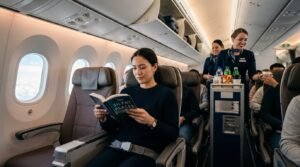
When turbulence hits, I look at the flight attendants. If they’re calm, chatting, pouring drinks, everything is fine. They fly every single day. Their body language is your real-time safety gauge.
I also started checking the Turbli website before flights. It gives you a turbulence forecast for your specific route. Knowing that “moderate chop expected over Kansas” ahead of time makes it less surprising and way less terrifying when it actually happens.
Give Yourself Grace After Landing
Nobody talks about this part, but the anxiety doesn’t always stop when the wheels touch down. My first solo landing, I felt this weird mix of relief, exhaustion, and a shaky kind of pride that made me tear up at baggage claim. That’s normal.
You just did something that scared you. Your body spent hours in fight-or-flight mode. Give yourself time to decompress. Sit at the gate for a few minutes after everyone rushes off. Grab food before you try to figure out ground transportation. Call someone who’ll be proud of you.
I texted my mom a selfie from the airport with the caption “I did it” and she still brings it up two years later. Small victories deserve celebration, especially the ones that cost you something emotionally.
FAQs
Is it safe to fly alone for the first time?
Absolutely. Millions of people fly solo every day, and airlines have systems designed to help passengers at every step. Flight attendants are trained to assist nervous travelers. Airports have information desks, signage, and apps that walk you through the process. You’re never truly “alone” in a building full of staff whose job is keeping you safe and comfortable.
What should I do if I have a panic attack on the plane?
Start with box breathing immediately: four counts in, hold four, out four, hold four. Press the call button and let a flight attendant know what’s happening. They’ve seen it before and they won’t judge you. Grip something cold, like a water bottle, to ground yourself physically. The panic will peak and then pass, usually within ten to fifteen minutes.
How do I handle travel anxiety when flying alone without medication?
Plenty of non-medication strategies work well. Breathing exercises, comfort kits with familiar items, calming playlists, and pre-flight planning all reduce anxiety significantly. Some people use CBD gummies or herbal supplements like magnesium glycinate, though you should check with your doctor first. The combination of preparation and in-flight coping tools can be surprisingly powerful on its own.
Should I tell the flight attendant I’m anxious?
Yes, every single time. They appreciate knowing because it helps them support you better. A quick, quiet mention while boarding is all it takes. Most attendants will check on you during the flight, explain unusual sounds, and make sure you feel looked after. It’s one of the easiest things you can do, and it makes a bigger difference than you’d expect.
What’s the best seat to pick if I’m an anxious flier?
Seats over or just in front of the wings feel the least turbulence. An aisle seat gives you freedom to move without feeling boxed in. A window seat gives you a wall to lean against and a view that can actually be calming. Avoid the very back of the plane, where turbulence feels strongest and engine noise is loudest. Pick based on what specifically triggers your anxiety most.
Conclusion
Flying alone for the first time is genuinely scary, and pretending otherwise doesn’t help anyone. But every solo traveler you see casually strolling through an airport once had a shaky, sweaty-palmed first flight too. You’ve got more tools now than I did, so use them, breathe through it, and text someone when you land.
What’s the destination for your first solo flight?