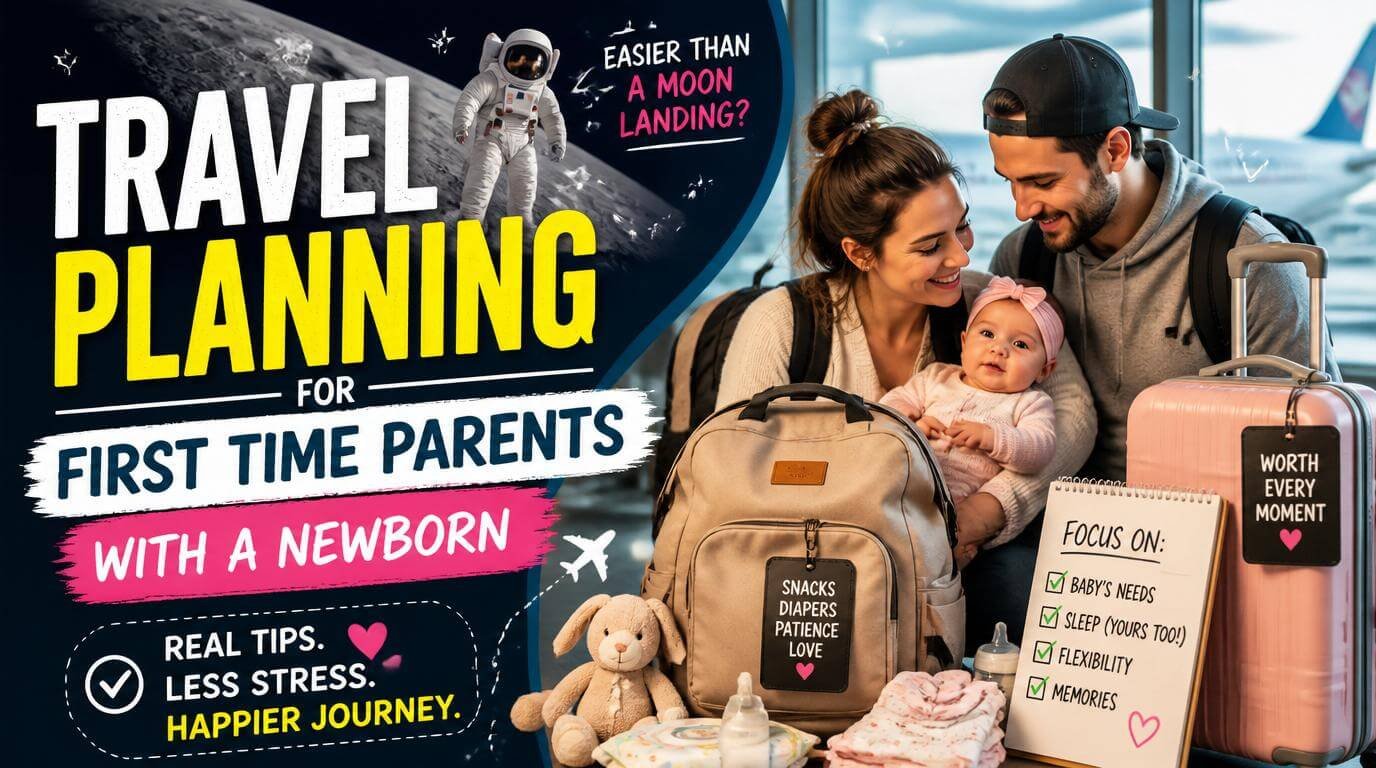
Travel planning for first time parents traveling with a newborn baby feels a lot like preparing for a moon landing, except NASA had more sleep. My wife and I took our daughter on her first trip when she was nine weeks old, and I won’t sugarcoat it: I packed like we were fleeing the country permanently. But we survived. You will too. The key isn’t perfection. It’s knowing what actually matters versus what your anxiety is telling you matters.
Start With Timing, Not the Destination
Before you even think about where to go, think about when. Most pediatricians say babies can fly after two weeks old, but the American Academy of Pediatrics recommends waiting until your baby has had their first round of vaccinations, typically around six to eight weeks. We waited until nine weeks and I’m glad we did, mostly because my wife and I were barely functional humans before that point anyway.
Pick a window that avoids peak growth spurts and major vaccination days. You don’t want your baby running a mild post-vaccine fever at 30,000 feet. Also, consider your own recovery. If the birthing parent is still healing, a stressful trip will make everything harder. There’s no trophy for traveling early. Give yourselves permission to wait a couple extra weeks if it means everyone is in better shape.
Talk to your pediatrician before booking anything. Ours gave us a quick checklist of what to watch for and even wrote a note for the diaper bag with our baby’s medical info, just in case.

Choose a Newborn-Friendly Destination
Not every destination works when you have a two-month-old strapped to your chest. That backpacking trip through Southeast Asia? Bookmark it for later. For your first trip, you want somewhere with easy access to medical care, clean water, and climate control. A place where you can retreat to a quiet room when everything falls apart, because at some point, it will.
We chose a beach rental about a four-hour drive from home. Close enough to turn around if disaster struck, relaxed enough to actually feel like a vacation. A few things that made the destination work for us:
- The rental had a washer and dryer (this alone saved us)
- A grocery store was five minutes away
- The nearest urgent care was within 15 minutes
Think boring logistics first, Instagram-worthy scenery second. Your newborn does not care about the view. They care about being fed, clean, and held, and you need a setup that makes all three easy.
Travel Planning for First Time Parents: What to Pack (and What to Skip)
Packing is where first-time parent anxiety hits its peak. I know because I brought a full-size bottle sterilizer on a three-day trip. Don’t be me.
Here’s what you actually need. A solid diaper bag with more diapers than you think is reasonable, then add five more. Bring formula or nursing supplies for at least double the travel time, because delays happen. Pack two full outfit changes for the baby per day, plus one for each parent. Yes, for you. You will get spit up on.
The Stuff That Saved Us
A portable white noise machine (we used the Hatch Rest Go) was the single best thing we packed. Hotel rooms, rental houses, airports, none of them are quiet. That little machine helped our daughter sleep through everything.
We also brought a lightweight travel bassinet, the Guava Lotus, and it folded flat into a backpack. Skip the giant Pack ‘n Play if you can.
What to leave behind: the cute outfits you want photos of (they’ll be covered in milk within an hour), extra toys (newborns don’t play with toys), and that third “just in case” blanket. Laundry exists in most places.
Flying With a Newborn: The Part Everyone Dreads
Let me be real. Flying with a newborn is not as bad as everyone makes it sound. Newborns mostly sleep. It’s toddlers you should be terrified of. But there are things you can do to make the flight smoother.
Book a window seat if you’re breastfeeding. It gives you a little privacy wall. If you’re bottle feeding, request a seat near the back where the ambient engine noise works as a natural sound machine. Feed your baby during takeoff and landing to help with ear pressure. A pacifier works too.
Gate-check your stroller rather than checking it with luggage. You’ll want it right up until you board and the second you step off the plane. Most airlines let you do this for free with no hassle.
One thing nobody told us: bring a gallon-size Ziploc bag with a full change of clothes, a few diapers, and wipes, and keep it in the seat pocket in front of you. Not in the overhead bin. Not under the seat. Right there, within arm’s reach. When a blowout happens mid-flight (and it will), you won’t have to unbuckle and dig through luggage while holding a messy baby.
TSA allows you to bring breast milk, formula, and baby food in quantities exceeding 3.4 ounces. Just tell them at the checkpoint. They’ll test it separately, but it’s fast.
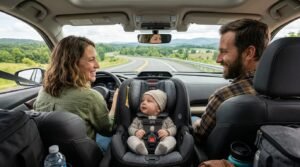
Road Trips: A Different Kind of Challenge
Driving with a newborn sounds easier than flying, and in some ways it is. You control the schedule. You can pull over. You have your car full of stuff. But long stretches in a car seat aren’t great for newborns, and the general recommendation is to take a break every two hours so your baby can come out of the seat.
We planned our four-hour drive with two stops built in. One at a rest area with a family restroom, one at a coffee shop where my wife could nurse comfortably. The trip took closer to six hours total, and that’s fine. Adjust your expectations or you’ll just stress yourself out.
A car seat mirror was essential. Being able to glance back and see our daughter without pulling over every ten minutes was worth every penny. We also kept the car slightly cooler than normal because babies in rear-facing seats with blankets can overheat without you realizing it. A small clip-on fan attached to her car seat helped with airflow.
Timing Your Drive
If possible, drive during nap time or at night. Our baby slept the entire first leg because we left at 6 PM, right after her evening feed. She woke up once, ate, and fell back asleep. Honestly, it was the most peaceful part of the entire trip.
Accommodations: Hotels vs. Rentals
Hotels offer convenience. Someone else cleans. Room service exists. But for newborns, a rental property usually wins. You get a kitchen to warm bottles or prep food, a separate bedroom so you’re not tiptoeing around in the dark, and laundry access.
We tried a hotel on a later trip and the biggest issue was noise. Every door slam in the hallway woke the baby. Every time housekeeping knocked, we held our breath. It wasn’t relaxing.
If you go the hotel route, call ahead and ask for a room away from elevators and ice machines. Request a mini-fridge if the room doesn’t have one, you’ll need it for milk storage. Most hotels will also provide a crib, but honestly, those hotel cribs are hit or miss. Bringing your own travel bassinet is safer and more predictable.
Airbnb and Vrbo rentals let you filter for “baby-friendly” options. Look for listings that mention a crib, baby gate, or childproofing. Read the reviews from other parents. They’ll tell you exactly what to expect.

Managing Feeding and Sleep Schedules on the Road
Here’s the truth nobody wants to hear: your baby’s schedule is going to get disrupted. Accept it now and you’ll have a better time. We spent the first day of our trip trying to force our daughter onto her normal routine, and it made everyone miserable.
By day two, we shifted to a “follow the baby” approach. She wanted to eat? We fed her. She seemed tired? We put her down. We stopped watching the clock and started watching her cues. The trip got about 300% more enjoyable after that.
If you’re crossing time zones, shift your baby’s schedule by 15 to 30 minutes per day leading up to the trip. It won’t eliminate jet lag entirely, but it softens the blow. For short trips with a one or two hour time difference, honestly don’t bother adjusting. Just go with the flow.
Keep one thing consistent: the bedtime routine. Whatever you do at home, bath, feed, white noise, song, replicate it on the road. That familiar sequence signals sleep to your baby even in an unfamiliar environment. It was the one piece of advice from our pediatrician that actually worked every single time.
Don’t Forget About You
This part gets overlooked constantly. You are also a person on this trip. First-time parents pour everything into keeping the baby comfortable and forget that they need to eat real food, sleep when possible, and occasionally enjoy themselves.
Tag-team with your partner. One person takes the baby for an hour while the other sits by the pool, takes a walk, or just sits in silence (silence is a luxury now, IMO). Trade off so neither person hits a wall.
Pack snacks for yourselves. Granola bars, trail mix, anything you can eat one-handed. We survived one airport layover entirely on Clif Bars and cold brew because finding a sit-down meal with a fussy newborn felt impossible.
And give yourselves grace. The trip won’t look like your pre-baby vacations. That’s okay. The fact that you’re doing it at all is a big deal.
Frequently Asked Questions
How old should a newborn be before their first trip?
Most pediatricians recommend waiting until at least six to eight weeks, after your baby has received their first vaccinations. Some parents travel earlier, but check with your doctor first. Premature babies or those with health concerns may need to wait longer. Your baby’s immune system is still developing, so crowded airports or busy tourist spots carry more risk in those early weeks.
What are the biggest mistakes first time parents make when traveling with a newborn?
Overpacking is number one. You don’t need every baby gadget you own. The second biggest mistake is refusing to deviate from the schedule. Babies are more adaptable than we give them credit for. Rigidity creates stress for everyone. Pack smart, stay flexible, and accept that some parts of the trip will be messy and imperfect.
Is flying or driving better for travel planning for first time parents traveling with a newborn baby?
It depends on distance. For trips under five hours, driving gives you more control and eliminates airport stress. For longer distances, flying is often easier because it’s faster overall. Newborns tend to sleep well on planes thanks to the engine noise. Whichever you choose, build in extra time for feeds, diaper changes, and the unexpected.
Do I need to buy a plane ticket for my newborn?
In the United States, children under two can fly as a lap infant for free on domestic flights. Some international airlines charge a small fee, usually around 10% of the adult fare. You won’t get an extra seat, though. If you want to bring the car seat on board and secure your baby in their own seat, you’ll need to purchase a separate ticket.
What should I pack in a carry-on diaper bag for a flight?
Pack at least six diapers, a full pack of wipes, two outfit changes for the baby, one shirt for you, a blanket, pacifiers, feeding supplies for double the flight time, a portable changing pad, plastic bags for dirty clothes, and any medication your baby needs. Keep everything accessible. A backpack style diaper bag works best because it leaves both hands free.
Conclusion
Traveling with a newborn is genuinely doable, even if it doesn’t feel that way while you’re packing the car at midnight with a screaming baby. Lower your expectations just a notch, pack with purpose instead of panic, and remember that your baby mostly needs you, not a perfect itinerary. What’s the one thing you’re most nervous about for your first trip with your little one?