
If you’re searching for travel advice for people traveling internationally for the first time alone, I’m guessing your stomach is doing that weird flip between excitement and pure terror. I get it. I booked my first solo international trip to Portugal three years ago and spent the weeks before departure convinced I’d end up stranded in a foreign airport with no phone signal and zero sense of direction. Spoiler: I survived. And honestly, that trip rewired how I see the world.
1. Get Your Documents Sorted Way Earlier Than You Think
Your passport is the single most important item you’ll carry. Check its expiration date right now. Many countries require at least six months of validity beyond your travel dates, and I’ve seen people turned away at check-in counters because of this.
Apply for or renew your passport at least three to four months before departure. If you need a visa, start that process immediately after booking. I use iVisa to check visa requirements for my nationality, but your country’s foreign affairs website works too. Make two photocopies of your passport, one for your carry-on and one stored digitally in Google Drive or iCloud. If your passport gets stolen, those copies will save you days of headaches at the embassy.
2. Book Your First Night’s Accommodation Before You Land
I know some travelers love the spontaneous “I’ll figure it out when I get there” approach. That works great on trip number five. On trip number one, landing in a foreign country at midnight with no place to sleep is not an adventure. It’s a panic attack waiting to happen.
Book at least your first two nights somewhere reputable. Booking.com and Hostelworld both let you filter by solo traveler ratings, which is incredibly useful. Pick a place near a transit hub or the airport so you’re not navigating an unfamiliar city while jet-lagged and dragging luggage through streets you can’t read signs on. I always book accommodations with free cancellation so I have flexibility without the stress.
3. Tell Someone Your Full Itinerary
This is the piece of travel advice for people traveling internationally for the first time alone that nobody wants to hear because it feels like something your mom would say. But your mom is right on this one.
Share your flight numbers, hotel addresses, and a rough daily plan with at least one trusted person back home. I share a Google Doc with my sister that I update as I go. If something goes wrong and you can’t communicate, someone needs to know where you were supposed to be. It takes ten minutes to set up and could genuinely matter in an emergency. Don’t skip this step because it feels uncool.
4. Pack One Bag, and Make It a Carry-On If You Can
Overpacking is the number one mistake solo travelers make. I learned this lugging a 50-pound suitcase up cobblestone streets in Lisbon while sweating through my shirt. Never again.
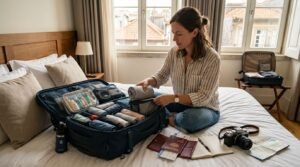
A 40-liter backpack like the Osprey Farpoint or the Tortuga Outbreaker can hold a week’s worth of clothes if you pack smart. Roll your clothes instead of folding. Bring fabrics that dry fast. You’ll do laundry along the way, I promise, and every hostel and hotel has a sink. The lighter your bag, the more freedom you have to walk, take buses, and actually enjoy your trip instead of worrying about your stuff.
What to Always Keep in Your Personal Item
Your personal item, whether it’s a daypack or a crossbody bag, should always hold your passport, phone, charger, one change of underwear, basic toiletries, any medications, and your bank cards. If your checked bag disappears (and airlines lose bags all the time), you can still function for 24 hours without a crisis.
5. Get a Travel-Friendly Bank Card Before You Leave
ATM fees and foreign transaction charges will quietly drain your budget if you’re not paying attention. I burned through almost $80 in fees on my first trip just by using my regular debit card at random ATMs.
Get a card with no foreign transaction fees before you go. The Charles Schwab debit card reimburses all ATM fees worldwide. For credit cards, the Chase Sapphire Preferred or Capital One Venture both waive foreign transaction fees. Notify your bank that you’ll be abroad so they don’t freeze your card the first time you try to buy a coffee in Barcelona. Carry two different cards from two different banks and keep them in separate places. If one gets lost or skimmed, the other keeps your trip alive.
6. Download Offline Maps and Translation Tools
Your phone is your lifeline when traveling solo. But cell service isn’t guaranteed everywhere, and roaming charges can be brutal.
Download offline maps in Google Maps for every city you’re visiting before you leave your hotel WiFi. It takes seconds and works perfectly without data. Google Translate lets you download entire language packs for offline use too. I downloaded Spanish before my trip to Mexico and used the camera feature to translate restaurant menus in real time. It felt like magic. Also grab the Maps.me app as a backup because it sometimes has better detail for walking paths and smaller streets than Google does.
7. Learn Five Phrases in the Local Language
You don’t need to become fluent. But knowing “hello,” “thank you,” “excuse me,” “how much,” and “where is the bathroom” in the local language changes how people treat you. It shows respect.
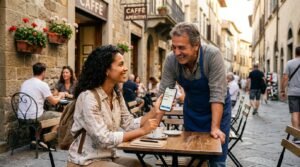
I used Duolingo for about two weeks before my Portugal trip, just ten minutes a day, and the reactions I got from locals when I stumbled through basic Portuguese were genuinely warm. People smiled more. Shop owners gave me recommendations. One café owner in Porto gave me a free pastéis de nata because I ordered in Portuguese instead of just pointing at the menu. Small effort, big payoff.
8. Stay Connected With an eSIM or Local SIM Card
Having reliable data while abroad keeps you safe, helps you find directions, and lets you stay in touch with people back home. Relying only on hotel WiFi is risky when you’re alone.
If your phone supports eSIM, use Airalo or Holafly to buy a data plan before you even board your flight. You activate it when you land, and it just works. If your phone doesn’t support eSIM, buy a local SIM card at the airport. They’re usually cheap and give you more data than you’ll need. I spent $12 on an eSIM for two weeks in Southeast Asia and had reliable 4G almost everywhere. That peace of mind was worth every cent.
9. Trust Your Gut, But Also Trust the World a Little
Fear is normal. Healthy caution keeps you safe. But if you let anxiety run the show, you’ll spend your entire trip locked in your hotel room refreshing flight tracker apps.
Most people you meet abroad are genuinely kind. Fellow travelers at hostels become fast friends. Locals who see you studying a map will often stop to help without you even asking. That said, basic street smarts apply everywhere. Don’t flash expensive electronics. Avoid poorly lit streets at night. If a situation feels off, leave. You don’t owe anyone politeness when your safety is in question. I’ve walked out of two sketchy situations abroad by simply saying “no thank you” and walking toward a crowded area. No drama, no confrontation. Just trust your instincts.

10. Get Travel Insurance, No Excuses
This is the least exciting piece of travel advice for people traveling internationally for the first time alone, and also the most important one you’ll ignore until you need it.
A friend of mine broke her ankle in Thailand and racked up $4,000 in hospital bills. Her travel insurance through World Nomads covered everything, including her medical evacuation flight home. A basic international travel insurance policy costs $30 to $80 for a two-week trip. That’s less than one nice dinner out. SafetyWing is another solid option, especially for longer trips, and their monthly subscription model is flexible. Read the fine print to make sure your policy covers medical emergencies, trip cancellation, and lost baggage at minimum.
11. Eat Where the Locals Eat
Skip the restaurants with menus in six languages and photos of every dish. Those exist to catch tourists, and the food is almost always mediocre and overpriced.
Walk two blocks off the main tourist street and look for the small place packed with locals at lunchtime. That’s where the real food lives. I found the best meal of my life in a tiny family-run restaurant in Oaxaca that had no English menu and five tables. The owner’s grandmother was cooking in the back. I pointed at what someone else was eating, nodded enthusiastically, and got a plate of mole negro that I still think about. Google Maps reviews from locals (not tourists) are your best tool for finding these spots.

12. Build in Empty Space on Your Schedule
The biggest regret I hear from first-time solo travelers isn’t that they missed a famous landmark. It’s that they packed every single hour with activities and came home exhausted instead of refreshed.
Leave at least one full day with nothing planned. Wander. Sit in a park. Find a café and just watch people walk by. Some of my favorite travel memories aren’t from any museum or guided tour. They’re from sitting on a bench in Lisbon eating a custard tart while listening to a street musician play fado guitar. Solo travel gives you something group travel never can: the freedom to do absolutely nothing when you feel like it. Use that freedom.
Frequently Asked Questions
Is it safe to travel internationally alone for the first time?
Yes, millions of people do it every year without incident. The key is preparation, not paranoia. Research your destination’s safety situation, register with your country’s embassy, stay aware of your surroundings, and keep someone at home updated. Most solo travelers report feeling safer than they expected, and the independence builds real confidence fast.
How much money should I budget for a first solo international trip?
It depends heavily on your destination. Southeast Asia and Central America can run $30 to $50 per day including accommodation and food. Western Europe is closer to $80 to $150 per day. Budget an extra $200 to $300 as an emergency cushion on top of your planned expenses, because unexpected costs always pop up.
What’s the best destination for a first solo international trip?
Portugal, Japan, and Mexico are consistently recommended by experienced solo travelers. All three have excellent public transport, affordable food, low crime in tourist areas, and welcoming cultures. Japan is especially great because it’s incredibly safe and well-organized, even if you don’t speak any Japanese.
Should I stay in hostels or hotels when traveling alone internationally?
Hostels are fantastic for meeting other travelers and saving money, especially if you book a smaller dorm room with four to six beds. Private hotel rooms give you more rest and personal space. I usually mix both on a trip. Start with a hostel to meet people, then switch to a private room when I need a recharge night.
How do I deal with loneliness while traveling solo?
Loneliness hits almost every solo traveler at some point, usually around day three. Stay in social hostels, join free walking tours, or use apps like Meetup or Couchsurfing Hangouts to find other travelers. Call someone back home when you need to. The lonely moments pass quickly, and they’re usually followed by the best experiences of the trip.
What should I do if I lose my passport abroad?
Go directly to your country’s nearest embassy or consulate. Bring those photocopies I mentioned earlier, plus any digital copies stored in your email or cloud. They can issue an emergency travel document, which usually takes one to three business days. File a police report too, because you’ll need it for insurance claims and replacement paperwork.
Conclusion
Solo international travel will push you, surprise you, and probably change how you see yourself. The nerves you feel right now are normal, and they fade fast once your feet hit foreign ground. So what’s the one thing on this list you’re going to tackle first?