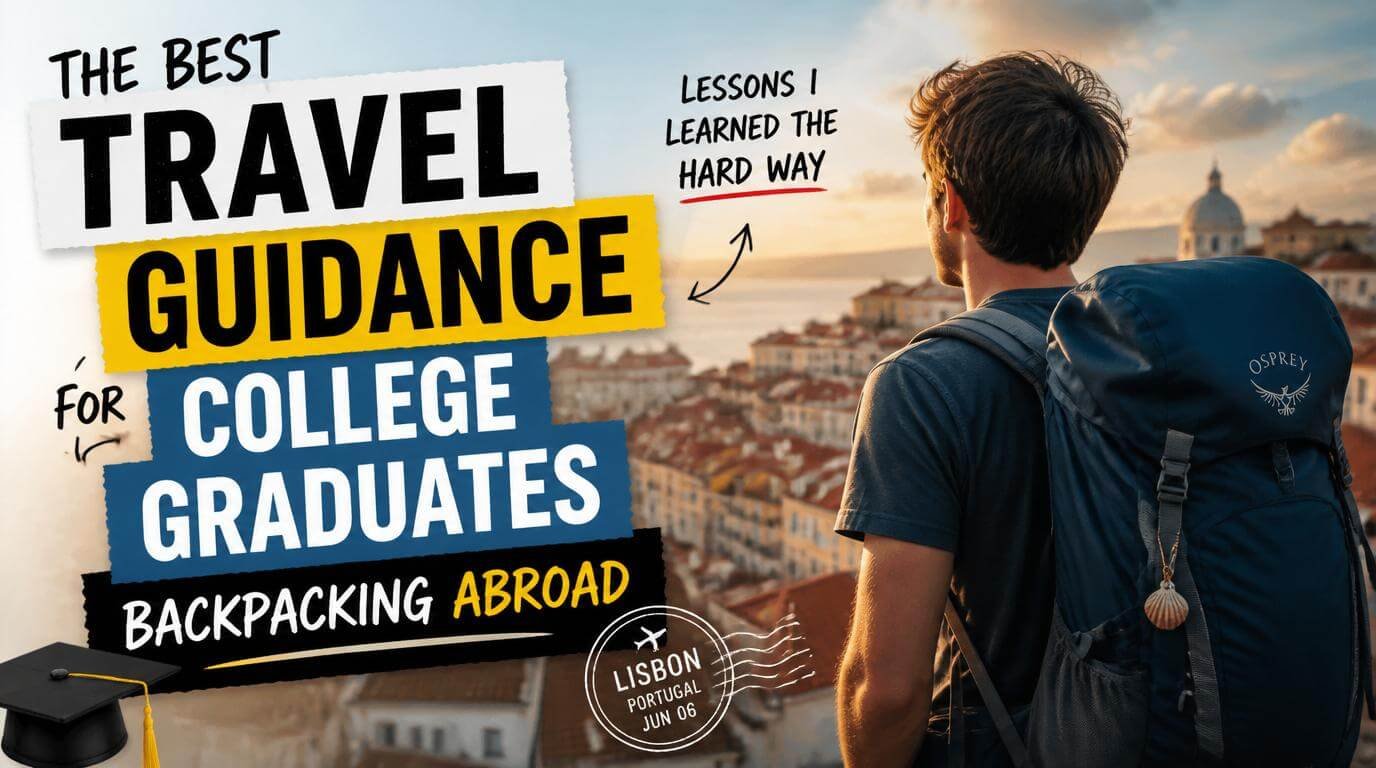
The best travel guidance for college graduates backpacking abroad after graduation ceremony doesn’t come from a glossy brochure. It comes from someone who actually did it, made mistakes, slept in weird places, and came home a completely different person. I tossed my cap in May, booked a one-way ticket to Lisbon in June, and spent the next four months living out of a 40-liter Osprey pack. That trip shaped everything I’ve done since. Here’s what I learned the hard way so you don’t have to.
Figure Out Your Budget Before You Pick a Single Destination
Most fresh graduates skip this step entirely. They scroll Instagram, see Santorini sunsets, and start booking flights without checking their bank account. Bad move.
Sit down and figure out how much money you actually have. Not how much you wish you had. I worked two campus jobs my senior year, saved about $6,500, and that funded four months across Portugal, Spain, Morocco, and a quick side trip to the Czech Republic. Southeast Asia would have stretched that money even further. Your budget dictates your route, not the other way around.
A rough daily budget for Western Europe runs $50 to $80 if you’re staying in hostels and cooking some meals. Southeast Asia sits closer to $25 to $40. South America falls somewhere in between. Use a free tool like Trail Wallet or just a simple Google Sheet to track every expense from day one. I used Trail Wallet and it saved me from going broke in Barcelona, where tapas and sangria can drain your funds faster than you’d expect.
Get Your Documents Sorted Months in Advance
Your passport needs at least six months of validity beyond your travel dates. Most countries enforce this, and airlines will refuse to board you if you don’t meet the requirement. I watched a guy get turned away at a gate in Newark because his passport expired in four months. He was crying. Don’t be that guy.
Check visa requirements for every country on your list. Americans can enter most of Europe visa-free for 90 days within a 180-day window under the Schengen Agreement, but countries like Vietnam, India, and Australia require advance visas or eTA applications. The website for each country’s embassy has the most current info. Don’t trust random travel forums for visa rules because they go out of date fast.
Make digital copies of your passport, driver’s license, travel insurance card, and any visa confirmations. Store them in Google Drive or email them to yourself. I also kept a laminated photocopy in a separate pocket of my backpack. Paranoid? Maybe. But when a hostel in Marrakech needed my passport overnight for “registration,” I handed over the copy instead.
Pick the Right Backpack (It Matters More Than You Think)
Your bag is your home for the foreseeable future. Choosing wrong means back pain, frustration, and the temptation to ditch half your stuff in a train station locker.
Stay in the 38 to 50 liter range. I used an Osprey Farpoint 40 and it fit carry-on requirements on almost every budget airline I flew, which saved me hundreds in checked bag fees on Ryanair and EasyJet. The Gregory Jade (for women) and Deuter Aircontact Lite are also solid picks.
Go to an REI or outdoor store and try packs on with weight in them. Seriously, load them up. A pack that feels great empty can feel miserable with 25 pounds in it. Hip belt fit matters more than anything. If the hip belt sits wrong, your shoulders take all the punishment and you’ll hate life by day three.
What to Actually Pack
Roll your clothes instead of folding them. Bring three shirts, two pairs of pants, one pair of shorts, seven pairs of underwear, and a packable rain jacket. That’s it. You’ll do laundry in sinks and at laundromats. Packing cubes from Amazon (the Shacke Pak set works great for $20) keep everything organized and compressed.
Skip the “just in case” items. You don’t need a hairdryer. You don’t need five books. You don’t need three pairs of shoes. One pair of trail runners and one pair of flip-flops covers every situation from hiking in the Pyrenees to showering in a hostel with questionable floors.
Buy Travel Insurance and Actually Read the Policy
I know, I know. Insurance sounds boring. But getting your appendix out in a foreign hospital without coverage can cost you $30,000 or more. That number isn’t hypothetical. A friend of mine got hit with a $14,000 bill for a broken ankle in Italy because she figured “nothing would happen.”
World Nomads and SafetyWing are the two most popular options for backpackers. I used SafetyWing because it works on a subscription model, about $45 every four weeks, and I could start and stop coverage as needed. World Nomads tends to offer better adventure sports coverage if you’re planning to do things like bungee jumping or scuba diving.
Read the policy details. Most plans don’t cover stolen electronics left unattended. Most require you to file a police report within 24 hours for theft claims. Some exclude injuries from motorbike accidents if you don’t have a motorcycle license. Knowing this stuff before you need it is the difference between a minor setback and a financial disaster.
Book Your First Few Nights, Then Wing It
Here’s travel guidance for college graduates backpacking abroad that took me a while to learn: don’t over-plan. Booking every single night before you leave kills the spontaneity that makes backpacking amazing. But booking nothing at all means you might arrive in a new city at 11 PM with no idea where to sleep.
The sweet spot? Book your first two or three nights in each major stop. Use Hostelworld for reviews and booking, and filter by “social” ratings if you want to meet people, or “clean” ratings if that’s your priority. I always read the most recent reviews, not the overall score, because hostels can change management and quality fast.
After those initial nights, ask other travelers where they stayed and loved. Some of my best accommodations came from recommendations I got over beers at a hostel bar. A woman in Porto told me about a tiny family-run guesthouse in Chefchaouen, Morocco, that cost $8 a night and served the best mint tea I’ve ever tasted. I never would have found that on an app.

Learn to Eat Like a Local, Not a Tourist
Eating at restaurants near major landmarks is basically lighting your money on fire. The pizza place next to the Colosseum charges €18 for a margherita that tastes like cardboard. Walk ten minutes in any direction and you’ll find the same pizza, made better, for €5.
Hit up grocery stores and local markets early in your trip. In Spain, I’d grab bread, cheese, jamón, and fruit from a Mercadona and eat like a king for under €4. Street food in Morocco and Southeast Asia is both cheaper and more delicious than sit-down restaurants.
Google Maps is your best friend here. Search “restaurants” and sort by rating, then look for places with lots of reviews from locals (reviews in the local language). That’s how I found a tiny ramen spot in Prague run by an actual Japanese chef. Eight bucks, massive bowl, life-changing broth.
Stay Connected Without Getting Ripped Off
Your American phone plan will destroy you with international roaming charges. Before you leave, either pause your plan or switch to Google Fi, which works in over 200 countries with reasonable data rates (around $10 per GB).
The other option, and what I ended up doing, is buying local SIM cards in each country. In most of Europe, you can grab a Vodafone or Orange prepaid SIM at the airport for €10 to €20 with plenty of data. In Southeast Asia, SIM cards cost almost nothing. Just make sure your phone is unlocked before you leave home.
Download offline maps in Google Maps for every city you’re visiting. Do this on Wi-Fi at your hostel. When your data is slow or nonexistent, you’ll still be able to find your way. I also kept the Google Translate app with offline language packs downloaded for Spanish, French, and Arabic. The camera translation feature, where you point your phone at a sign and it translates in real time, is genuinely magical when you’re staring at a menu written entirely in Darija.
Safety Tips That Actually Matter
Most of the world is safer than the evening news makes it seem. But common sense goes a long way, and a few habits can prevent most problems.
Wear a money belt or keep your valuables in an inside pocket when you’re in crowded areas. Pickpockets in Barcelona, Rome, and Paris are skilled, fast, and they target tourists who look distracted. I got pickpocketed on the Barcelona Metro during my second week because I had my phone in my back pocket like an amateur. Lesson learned painfully.
Never keep all your cash and cards in one place. Split them between your money belt, your backpack’s hidden compartment, and your daypack. If one gets stolen, you’re not stranded. Keep at least one backup debit card. I recommend having both a Charles Schwab checking account (zero ATM fees worldwide and automatic fee reimbursement) and a Wise card for currency conversion at the real exchange rate.
Trust Your Gut
If a situation feels off, leave. If someone is being too friendly and insistent, walk away. This isn’t about being paranoid or rude. It’s about recognizing that scams exist everywhere and they specifically target young travelers who want to be polite. The “friendship bracelet” scam in Paris, the “closed restaurant” redirect scam in Rome, the fake petition scam across most of Southern Europe. Google common scams for each destination before you arrive.
Travel Guidance for College Graduates Backpacking Abroad: The Mindset Shift
The practical stuff matters, but nobody talks enough about the mental side of solo backpacking after graduation. You just spent four years with a built-in social structure, a daily schedule, and a clear sense of purpose. Suddenly you’re alone in a foreign country with no deadlines and no one telling you what to do next.
That freedom is incredible. It’s also disorienting. I had moments in my first week, sitting alone at a café in Lisbon, wondering if I’d made a terrible decision. Everyone else my age was starting jobs, signing leases, posting LinkedIn updates. And there I was, eating sardines on toast and trying to figure out the Portuguese subway.
The loneliness passes. You meet people at hostels who become instant travel companions. You fall into a rhythm. You start appreciating the fact that you’ll never again have this kind of unstructured time, and the pressure to “figure out your life” fades into the background. FYI, most of the people posting those LinkedIn updates are envious of you. They just won’t say it out loud.
Make the “Return Home” Plan Before You Leave
One thing that blindsided me was coming back. I had a vague plan of “I’ll figure it out when I get home,” which turned into three weeks of sleeping on my parents’ couch feeling purposeless and depressed. Post-travel blues are real and nobody warns you about them.
Before you leave, set up at least a loose framework for your return. Maybe that’s a job application timeline, a plan to move to a specific city, or even just a few informational interviews scheduled for the month after you get back. Having something to anchor yourself to makes the transition way smoother.
Also, give yourself grace. You’re going to feel weird for a while. Grocery stores will feel overwhelming. Driving will feel strange. Your friends who didn’t travel will have a hard time relating to your stories after the first 15 minutes. That’s normal. Join backpacker communities on Reddit or Facebook to stay connected with people who get it.
FAQs
How much money should I save before backpacking after graduation?
It depends heavily on where you go. For four months in Western Europe, aim for $6,000 to $8,000 minimum. Southeast Asia can work on $4,000 to $5,000 for the same duration. South America falls around $5,000 to $6,500. These numbers assume hostel stays, street food, and budget transportation. Having a buffer of $1,000 for emergencies is smart too.
Is it safe for a solo college graduate to backpack alone?
Absolutely, as long as you take basic precautions. Millions of people backpack solo every year without incident. Stay aware of your surroundings, avoid walking alone late at night in unfamiliar areas, and keep your valuables secure. Hostels are great for meeting travel buddies quickly if you prefer company on certain legs of your trip.
What’s the best travel guidance for college graduates backpacking abroad on a tight budget?
Cook your own meals whenever possible, travel by bus or train instead of flying, stay in hostel dorms instead of private rooms, and travel during shoulder season (September through November or March through May) when prices drop. Free walking tours exist in almost every major city and they’re genuinely excellent. Tip what you can afford at the end.
Should I plan my entire route before leaving?
No. Plan your first week or two in detail and keep the rest flexible. Backpacking is about adapting. You’ll hear about incredible places from other travelers, or you’ll fall in love with a city and want to stay longer. Over-planning locks you into a schedule that fights against the whole point of the experience.
Do I need any vaccinations before backpacking?
Check the CDC Travelers’ Health website for your specific destinations. Western Europe generally doesn’t require anything beyond your routine vaccines. Southeast Asia, Africa, and parts of South America may require Hepatitis A and B, Typhoid, or Yellow Fever vaccinations. Schedule a travel health appointment at least six weeks before departure because some vaccines need time to take effect.
How do I handle the career gap on my resume?
Frame it as intentional and growth-oriented. You developed cross-cultural communication, problem-solving, budgeting, and adaptability. Most employers, especially younger hiring managers, respect the decision and see it as a sign of independence. IMO, any employer who holds a post-graduation trip against you is not someone you want to work for anyway.
Conclusion
That cap-and-gown version of you has no idea what’s coming, and that’s exactly the point. Backpacking after graduation is messy, uncomfortable, and absolutely one of the best things you can do before “real life” starts pulling you in every direction. So where are you heading first?