
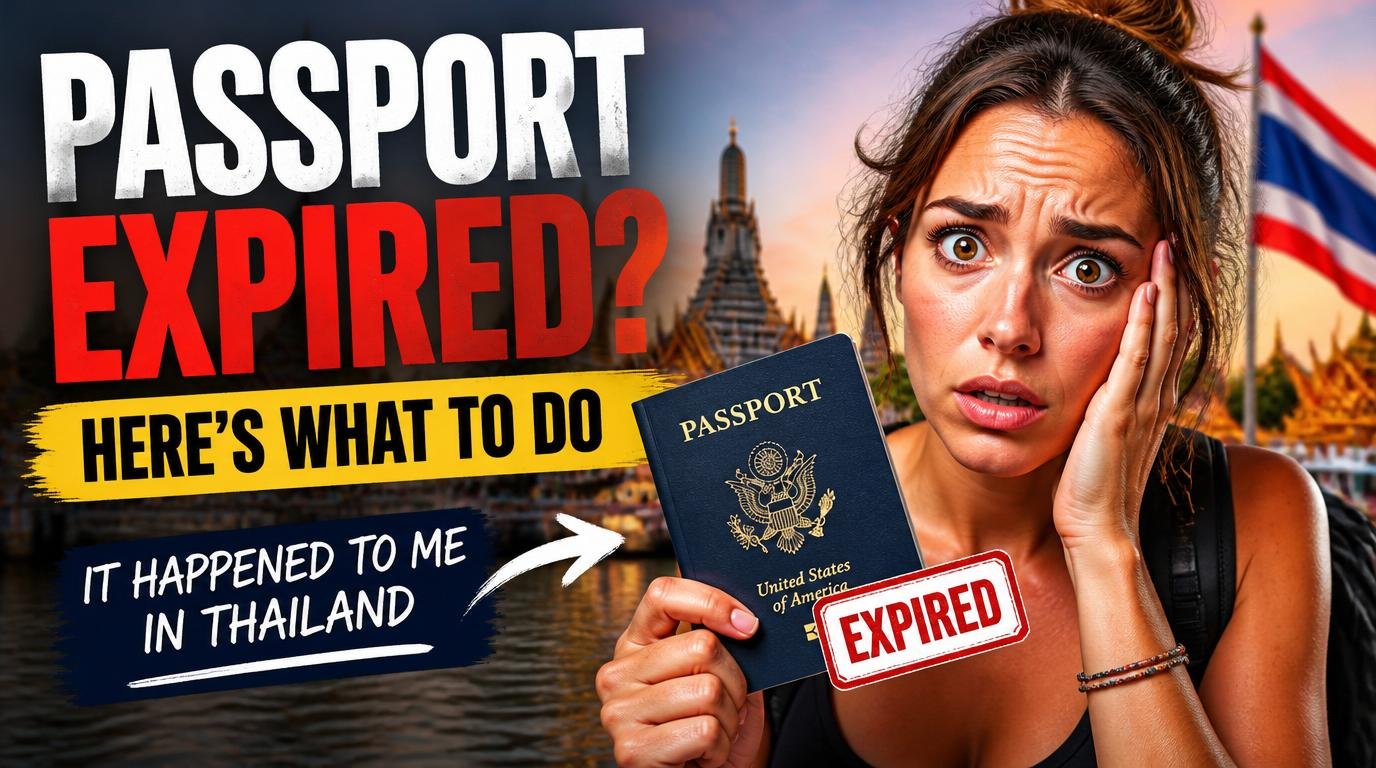
Figuring out what to do when your passport expires during an international trip is genuinely terrifying, and I know because it happened to me in Thailand. One minute you’re checking into your hotel, the next you’re staring at an expiration date that’s already passed. Your stomach drops. Your mind races. But here’s the thing: people fix this situation every single day, and you will too.
Stay Calm and Assess Your Exact Situation
Before you do anything else, take a breath and get clear on the facts. Panicking will only make things harder.
Pull out your passport right now and look at the expiration date. Is it already expired, or will it expire before your scheduled return flight? These are two different problems with slightly different solutions. Also check if your passport has physical damage, because that matters too.
Write down exactly where you are, how many days until your planned departure, and whether you have any other identification with you. A driver’s license, a photocopy of your passport’s info page, even a photo on your phone. This information will speed up every conversation you’re about to have.
Contact Your Country’s Nearest Embassy or Consulate Immediately
This is your single most important step. Your embassy exists specifically to help citizens in situations like this.
Google “[your country] embassy in [current country]” and grab their emergency contact number. Most embassies have 24-hour emergency lines for situations involving lost, stolen, or expired passports. Call them, not email. Phone calls get faster responses when you’re in a time crunch.
When you call, explain clearly: your passport expired, you need to travel home, and you need their guidance on the fastest path forward. The embassy staff handles these cases regularly. They’ll tell you exactly which documents to bring, what fees to expect, and how quickly they can process your request. FYI, some embassies can issue emergency travel documents within 24 to 48 hours if you have a booked flight.
What to Bring to Your Embassy Appointment
Gather everything before you go. You’ll typically need your expired passport, proof of citizenship (birth certificate if you have it), two passport-style photos, proof of your travel plans, and payment for expedited processing fees. Some embassies accept credit cards, others require cash in local currency. Ask when you call.

Understand the Difference Between an Emergency Passport and a Travel Document
Not all emergency documents work the same way, and knowing the difference saves headaches at the airport.
A full emergency passport is basically a regular passport issued quickly. It’s valid for the standard 10 years (for adults) and works everywhere a normal passport works. Some embassies can issue these, but processing takes longer.
An emergency travel document or limited validity emergency passport is a temporary document that gets you home. It’s typically valid for a single trip or a very short period. It might have restrictions on which countries you can transit through. If your return flight has layovers, confirm with the embassy that your emergency document will be accepted at every stop.
I got a limited validity document in Bangkok. It worked perfectly for my direct flight home, but my friend in a similar situation had to rebook a connecting flight through a different country because his transit country didn’t accept his particular document.
Notify Your Airline About Your Passport Situation
Airlines deal with passport problems constantly. They’re not going to be shocked.
Call your airline’s customer service line and explain that you’re working with your embassy to resolve an expired passport. Ask about their rebooking policies for situations like yours. Many airlines will waive change fees for documented emergencies, though you’ll likely need to provide proof from your embassy.
If you need to extend your stay while waiting for new documents, ask if your return ticket can be held open. Some airlines are flexible, especially if you’re calm and polite on the phone. Getting angry at the reservation agent accomplishes nothing, trust me.

Check the Entry and Exit Requirements of Your Current Country
Here’s something that catches people off guard: even with a fresh emergency passport, your current host country has rules about who can leave.
Some countries require that your passport be valid for a certain period beyond your departure date. Others have specific exit visa requirements or overstay penalties if you’ve been there longer than your original visa allowed (because you were stuck waiting for documents).
Visit or call the local immigration office to explain your situation. Ask if you need any additional stamps, permits, or clearance documents before departing. Being proactive here prevents ugly surprises at the airport exit immigration counter.
What to Do When Your Passport Expires Mid-Trip and You’re in a Remote Area
Not everyone is conveniently near their embassy when disaster strikes. If you’re on an island or in a rural area, your timeline gets trickier.
First, find out if your embassy has any partner facilities, honorary consuls, or mobile services in your region. Smaller countries sometimes share consular resources. Call and ask.
If you absolutely must travel to the embassy in person, consider the logistics carefully. Do you need a domestic flight within the country? Can you still fly domestically with an expired passport? Rules vary. In some countries, your expired passport plus another form of ID will get you on a domestic flight. In others, you’ll need to arrange ground transportation.
Budget extra time for this. What feels like a two-day problem in a major city can become a week-long ordeal when you’re starting from a remote location.

Handle the Financial Side Without Making Things Worse
Emergency passport services aren’t free, and unexpected extended stays add up fast.
Standard expedited passport fees range from $150 to $200 USD at most American embassies, but other countries have different pricing. You might also pay for passport photos, document shipping, and additional nights at your accommodation.
If money is genuinely tight, ask your embassy about payment plans or deferred payment options. Some offer them. Also contact your travel insurance company right now. Many policies cover emergency passport replacement costs and additional accommodation expenses caused by documented travel emergencies. Dig out your policy number and file a claim as soon as you have documentation from your embassy visit.

Avoid Common Mistakes That Make Everything Harder
I’ve seen fellow travelers sabotage their own situations. Don’t be one of them.
Don’t lie at the airport. Attempting to board with an expired passport and hoping no one notices always fails. Airlines face massive fines for transporting passengers with invalid documents. They check carefully.
Don’t assume transit countries are fine. Even if your destination accepts your emergency document, the country you’re connecting through might not. Verify every leg of your journey.
Don’t leave the embassy without confirming everything in writing. Get receipts, confirmation numbers, expected processing times, and a direct contact if something goes wrong. Save every piece of paper.
Don’t forget to update people at home. Someone should know your situation, your new timeline, and your emergency contacts. If things go sideways, you want backup.
FAQs
Can I still fly home if my passport expired yesterday?
No airline will let you board an international flight with an expired passport, even if it just expired. You’ll need to visit your embassy and obtain a valid emergency travel document or replacement passport before any airline will allow you to fly. This rule applies regardless of which airline or destination you’re dealing with.
How long does it take to get an emergency travel document abroad?
Processing times vary by embassy and current demand. Some embassies issue emergency travel documents within 24 hours for urgent cases. Others may take 3 to 5 business days. Call ahead and explain your timeline so they can advise whether expedited processing is possible for your situation.
Will travel insurance cover an expired passport situation?
Many comprehensive travel insurance policies cover emergency passport replacement fees and additional accommodation costs caused by documented travel emergencies. However, coverage varies widely between policies. Contact your insurance provider directly with your policy number to confirm what’s covered before paying out of pocket.
What happens if my passport expires during an international trip with multiple countries?
This situation gets complicated fast. You’ll need to work with your embassy in your current country first. Your emergency document must be valid for entry into every country remaining on your itinerary, or you’ll need to modify your travel plans. Some emergency documents only allow direct return to your home country.
Can I prevent this from happening on future trips?
Absolutely. Most countries recommend carrying a passport with at least 6 months validity beyond your travel dates. Set calendar reminders for your expiration date. Some countries also require blank pages for entry stamps, so check that too. A quick passport validity check should become part of your standard trip planning routine.
Conclusion
Getting stuck abroad with an expired passport feels like a nightmare, but it’s a solvable problem with clear steps. Your embassy is your lifeline, so call them first and follow their instructions exactly. Have you ever dealt with a passport emergency while traveling?